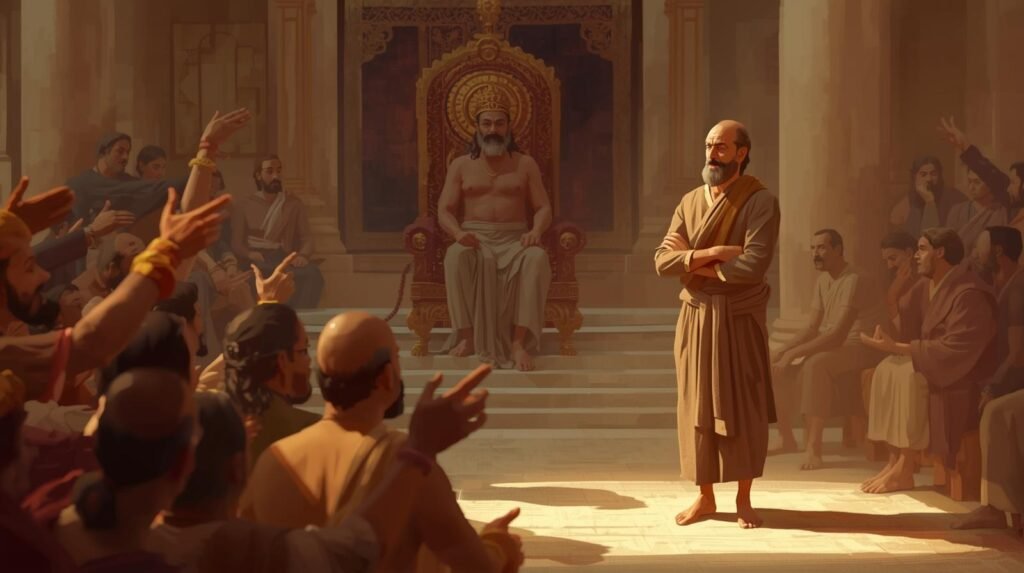
Voices rose and fell, arguments layered upon arguments, each one louder than the last. Advisors spoke of strength, retaliation, and necessity. Decisions were urged quickly, before hesitation weakened resolve.
Dhṛtarāṣṭra listened. Or appeared to.
His blindness had long trained him to rely on sound, and the noise of the court felt, to him, like certainty.
Vidura stood apart.
He did not interrupt.
He did not argue.
He did not match the urgency that filled the hall.
When finally addressed, his response was brief. He spoke without embellishment, without appeal, without urgency. His words were placed carefully—almost sparingly—like something offered, not imposed.
He did not insist on being heard again.
When the king turned away, Vidura did not raise his voice.
When counsel was ignored, he did not sharpen his tone.
He did not repeat himself for effect.
The court moved on. Decisions were made.
The noise returned.
Vidura remained silent—not as withdrawal, but as containment.
His authority did not expand through speech.
It remained unchanged by dismissal.
Long after the voices of the court dissolved into consequence, it was his quiet counsel that endured—not because it was loud enough to command obedience, but because it did not need to.